Project Overview
With all eyes on the biopharmaceutical industry, it was time to refresh Pfizer's dot-com experience. Over the course of 8 months, I worked as one of two full-time designers to build Pfizer's new web and mobile experience.
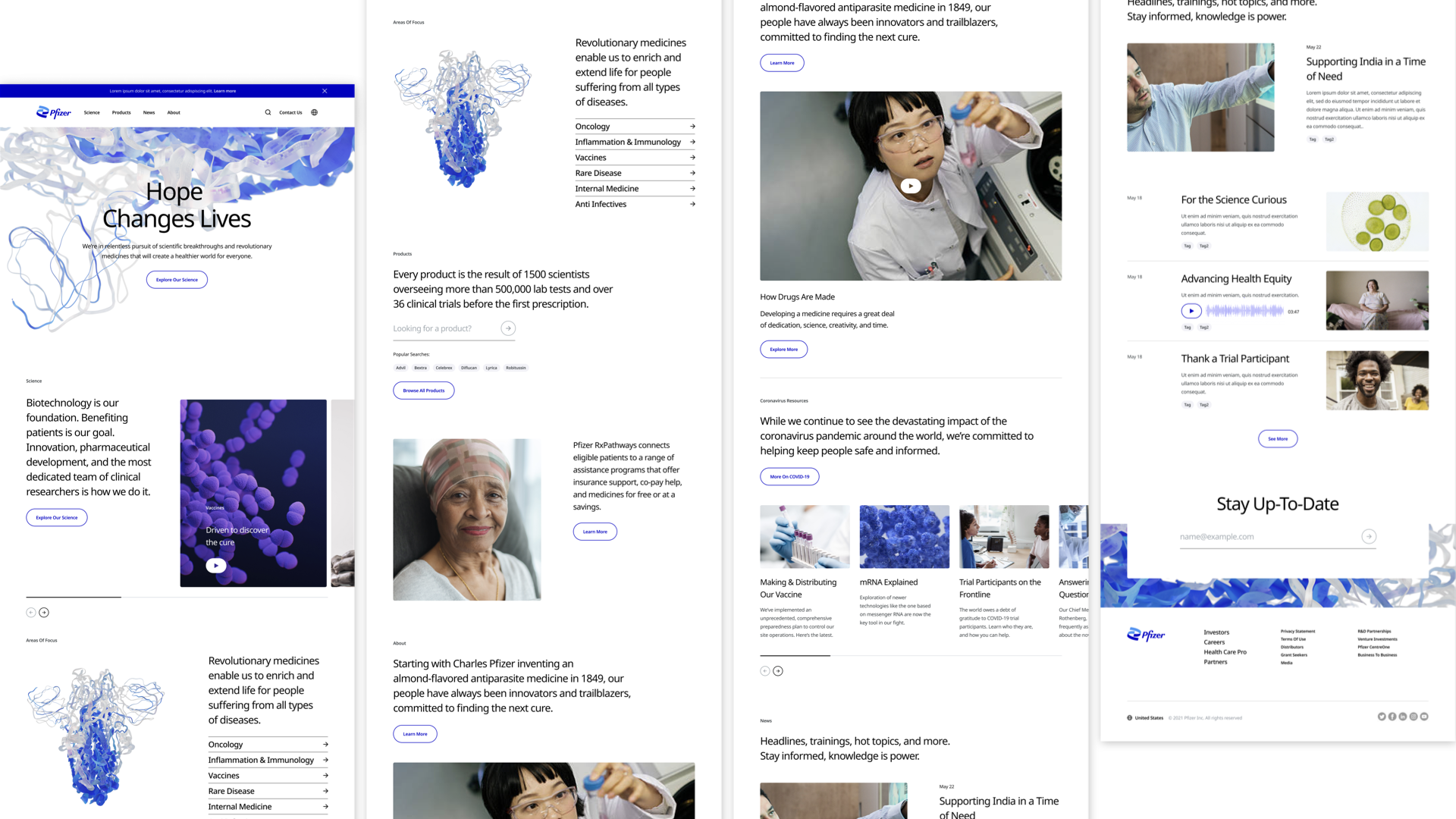
This case study includes 3 phases:
- Background - Discovery: Distilling qualitative and quantitative research into brand and audience insights.
- Opportunities - Definition: Identifying the experience principles and applying them to wireframes.
- Action - Design: Building the foundational system to implement into a modular site design.
I came onto the team while research was wrapping up. Below is a summary of insights from our researchers to help you understand how it influenced the design.
1. Background: Discovery Insights
During the discovery phase of this project, our researchers learned several insights across the Company, Consumer, and Content.
Company
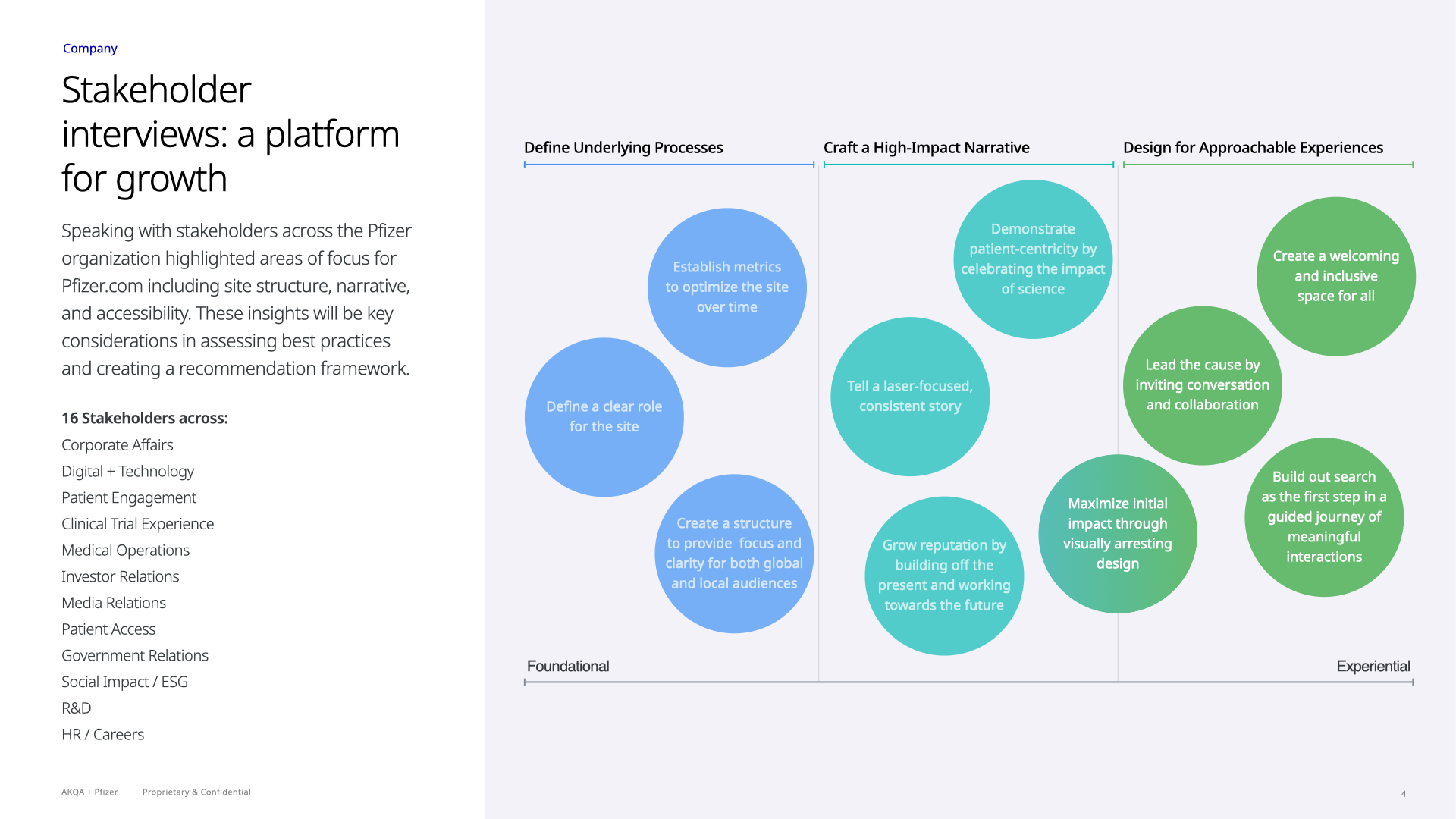
From interviews with 16 internal stakeholders across 12 departments, three main business goals that emerged were:
- better representation of organizational transformation
- creation of an influential, unified site platform
- leadership through championing science and its impact
Consumer
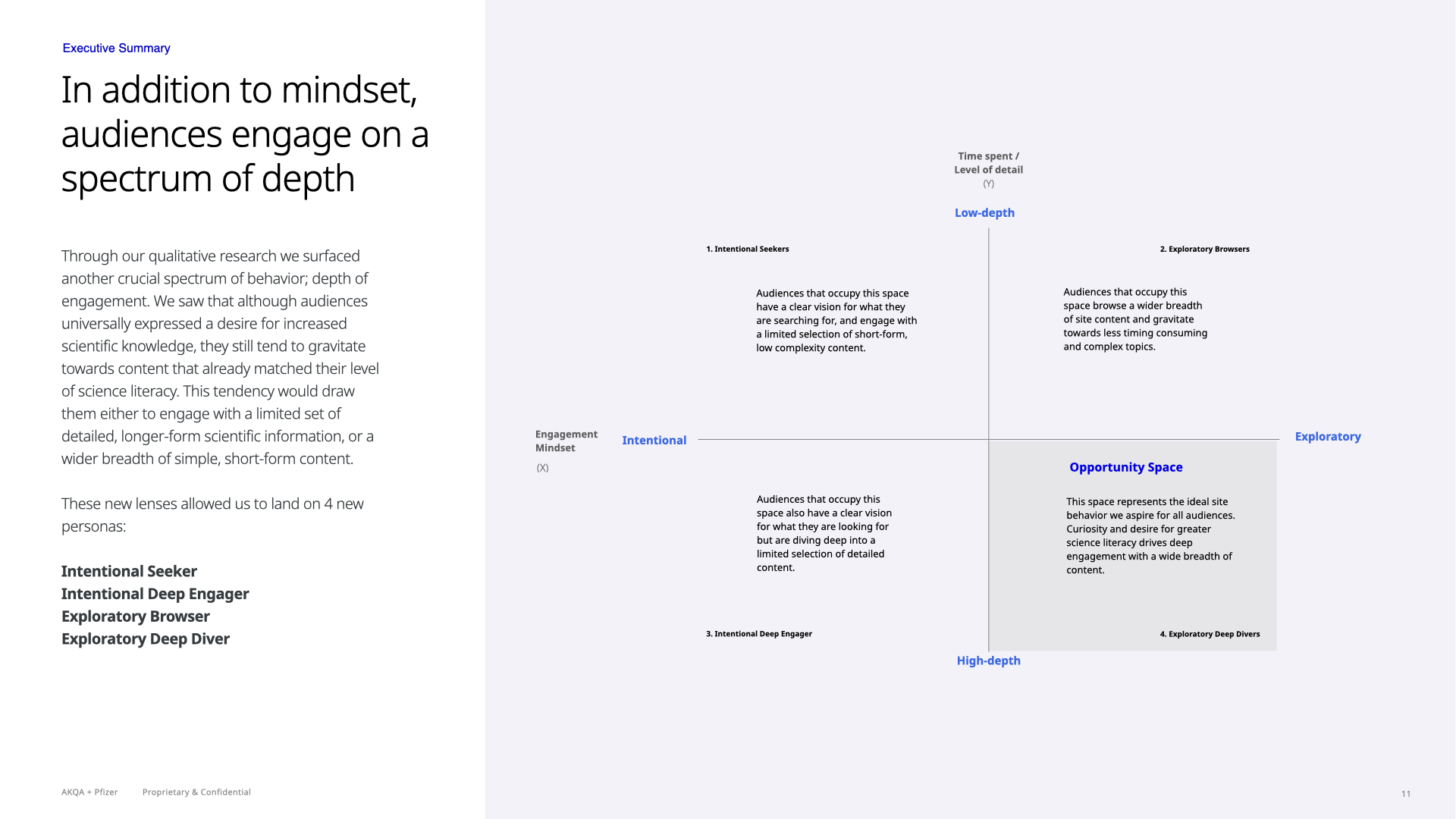
There are primary Pfizer audiences that the new site must target: Patients, Health Care Providers, Care Givers, Job Seekers, and Researchers. 325 results from a quantitative survey across the audiences revealed that they need:
- searchable, science-backed information
- a behavior-based site as opposed to role-based
- intuitive, interactive tools
Content
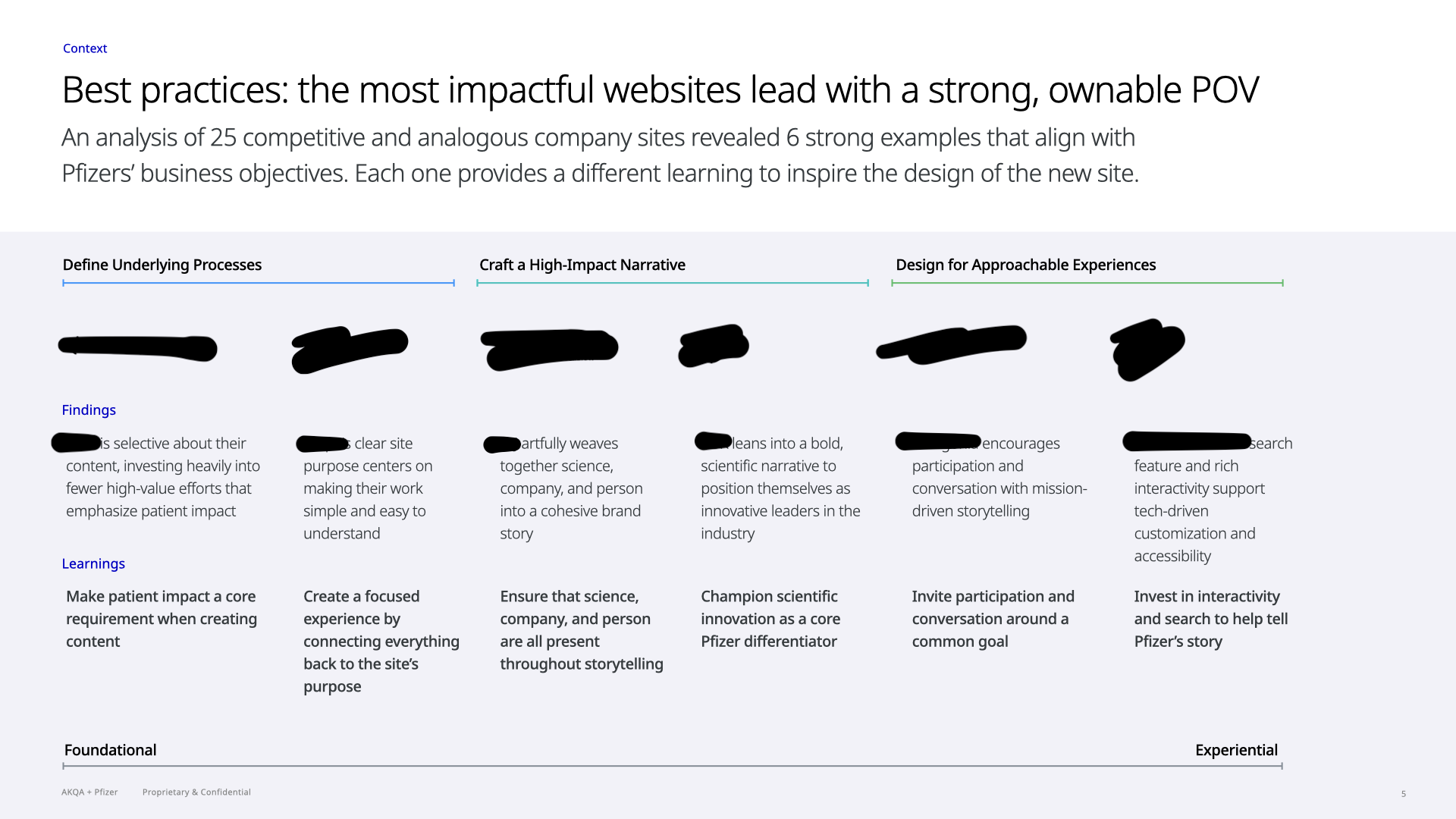
From analyzing in- and out-of-category companies, comparative research revealed that the most impactful sites have:
- an ownable point-of-view
- a cohesive brand narrative
- promotion of leadership in the industry through their achievements of a greater mission
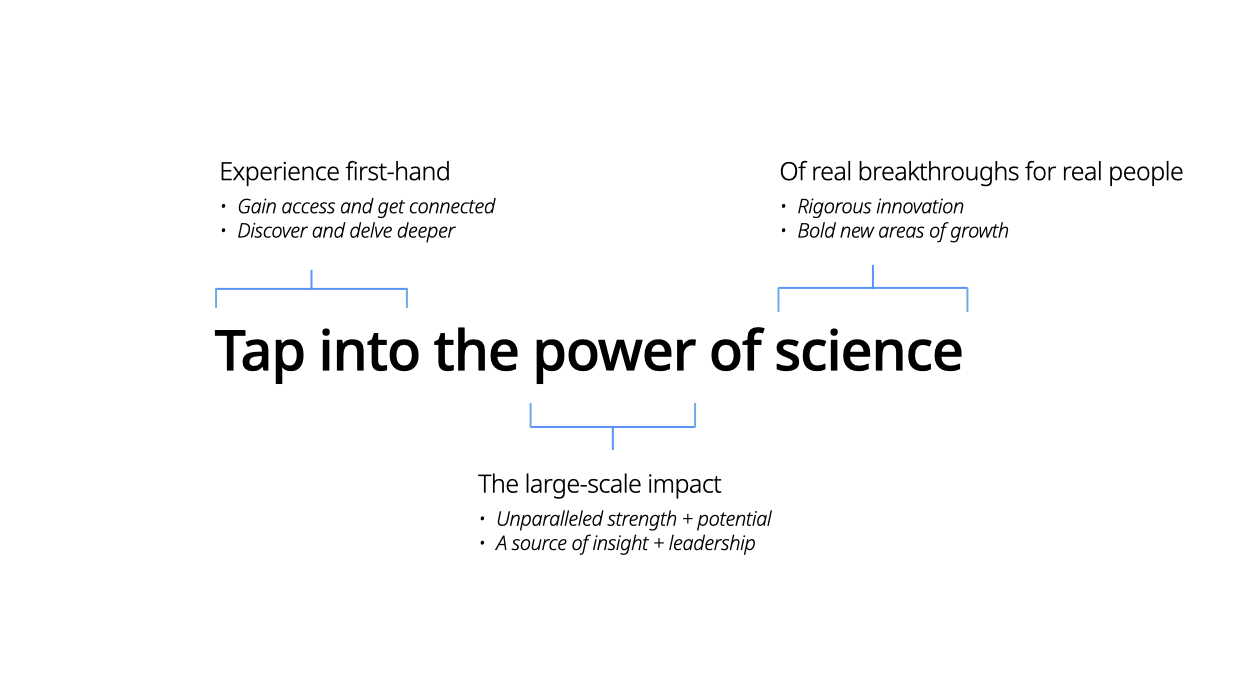
These insights along with Pfizer's brand promise of being in the vanguard of Breakthroughs that Change Patients' Lives led to the final site experience vision:
Tap into the power of science.
2. Opportunities: Defining the Experience Principles
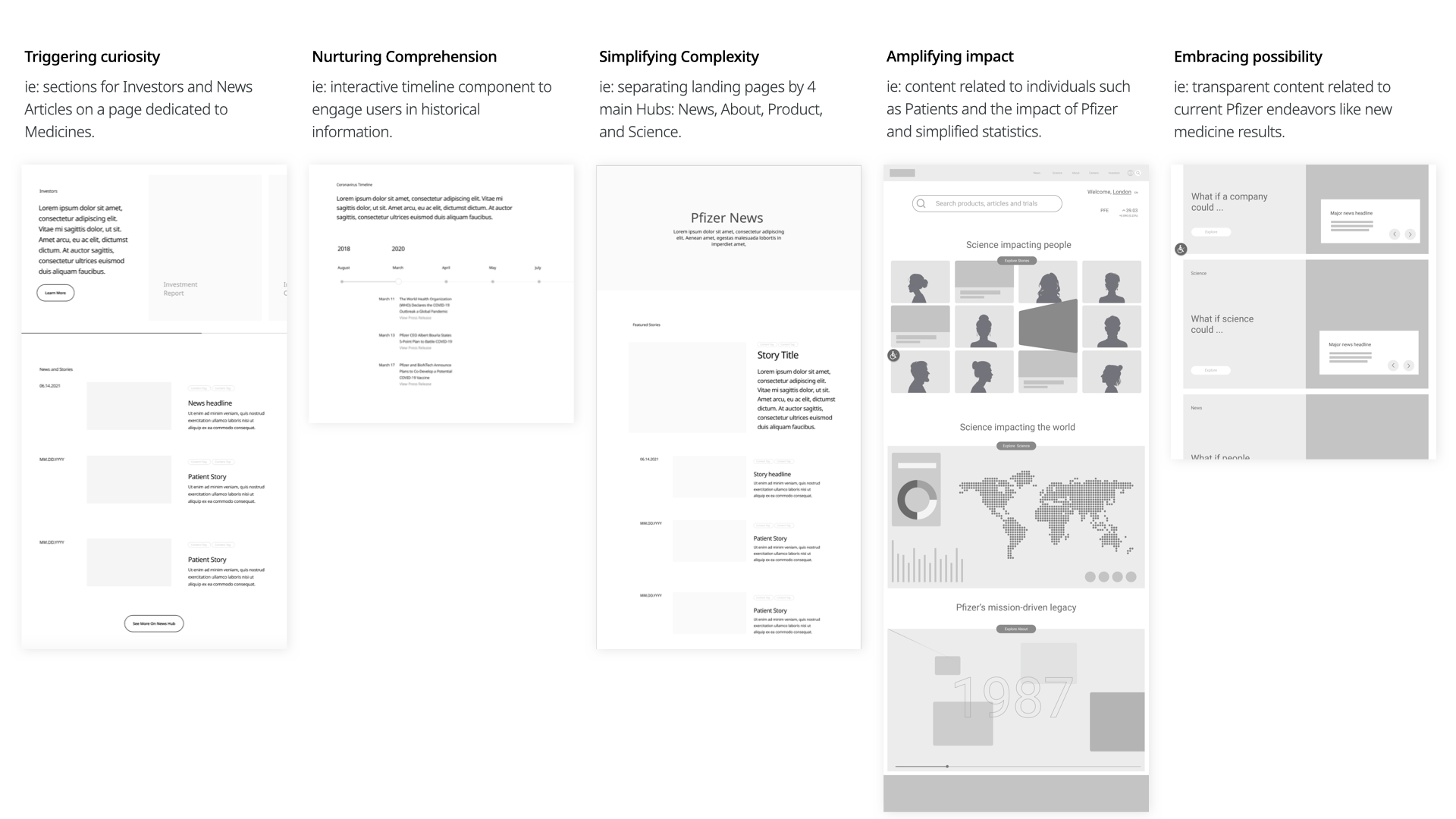
Defining the experience principles helps us establish HOW we are going to Tap Into The Power of Science. These principles were key in rationalizing user experience decisions and flows, and directly impacted certain content and/or functionality choices.
- Triggering Curiosity → Cross-pollinating content across different pages
- Nurturing Comprehension → Interactive elements to engage users in the content
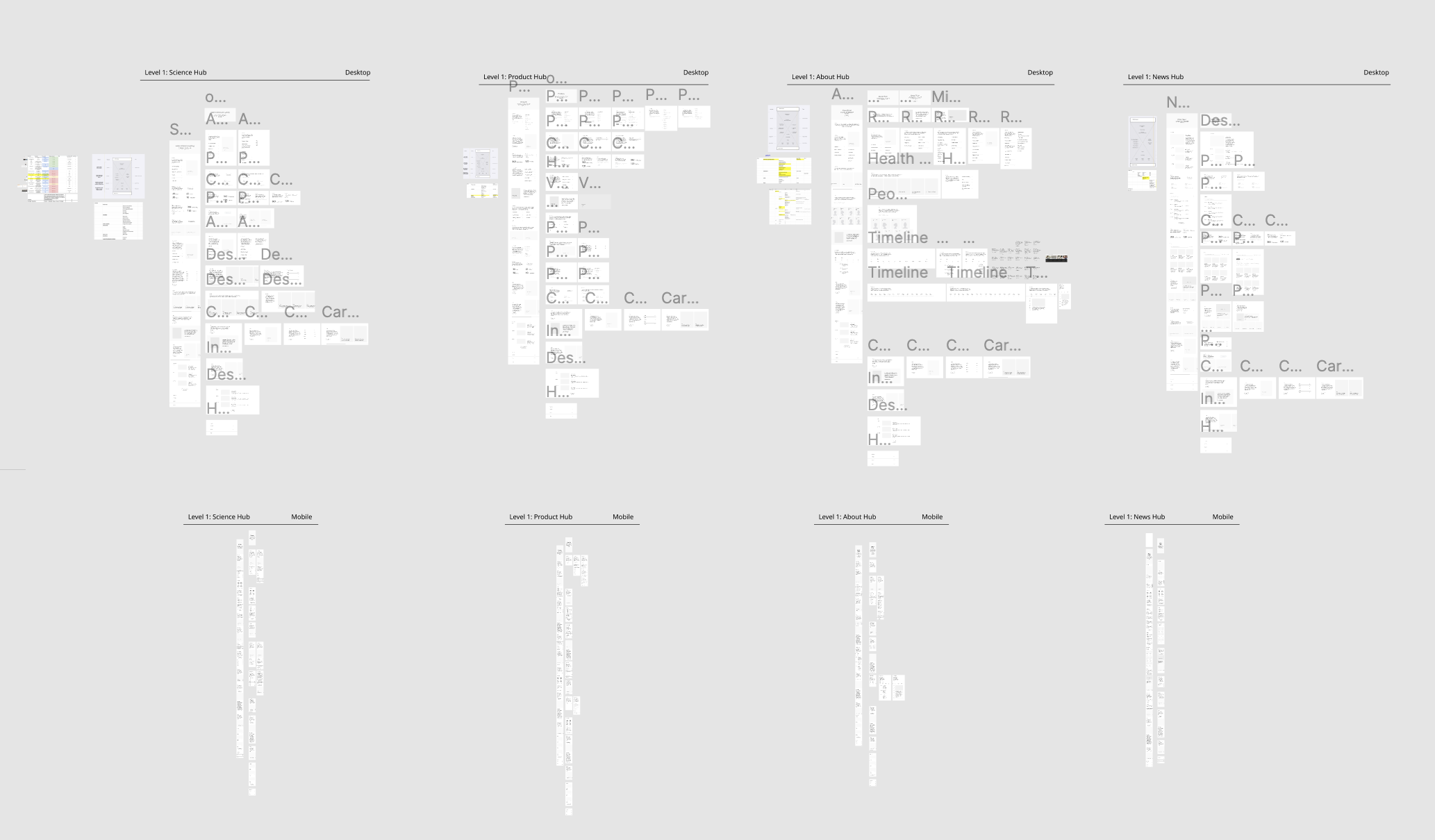
- Simplifying Complexity → Setting clear distinctions between different pages and their content to limit information and visual overload
- Amplifying Impact → Human-centered and data-driven content
- Embracing Possibility → Forward-thinking content
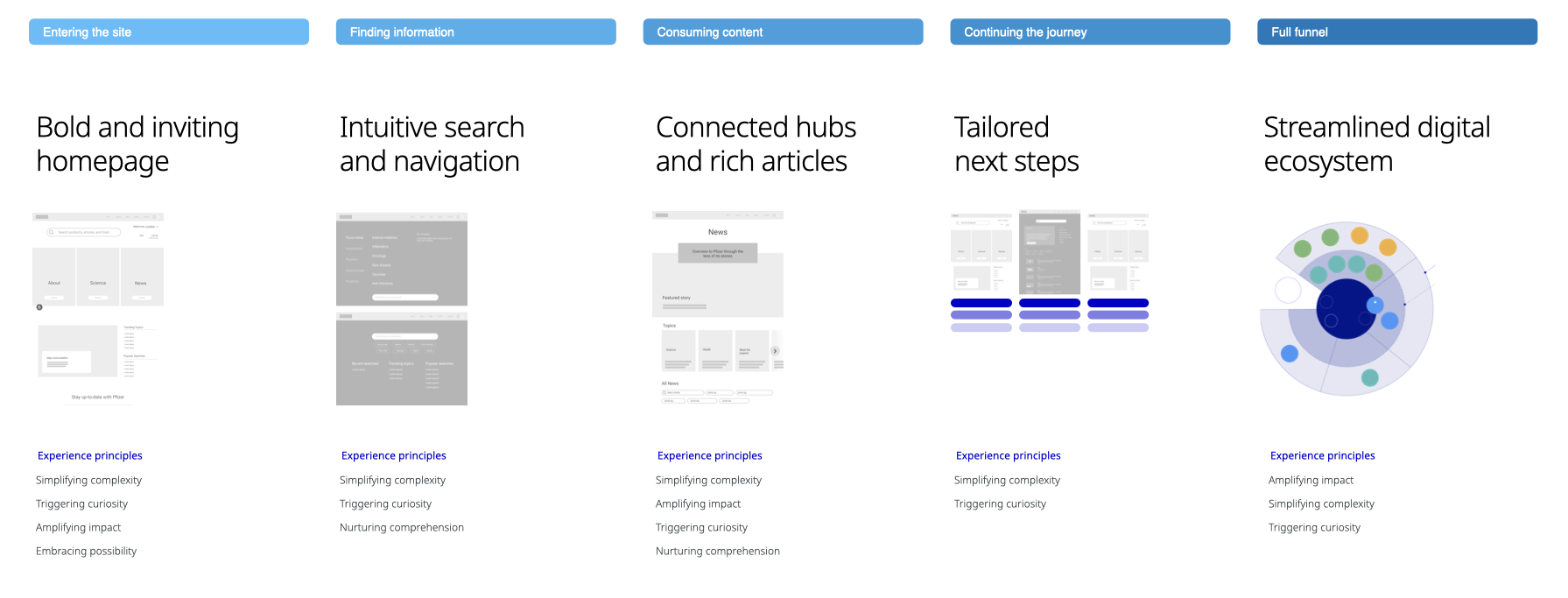
We mapped out these principles against the typical journey which helped with rationalizing our UX decisions during the wireframing process.
Wireframing
3. Action: Design System and Implementation
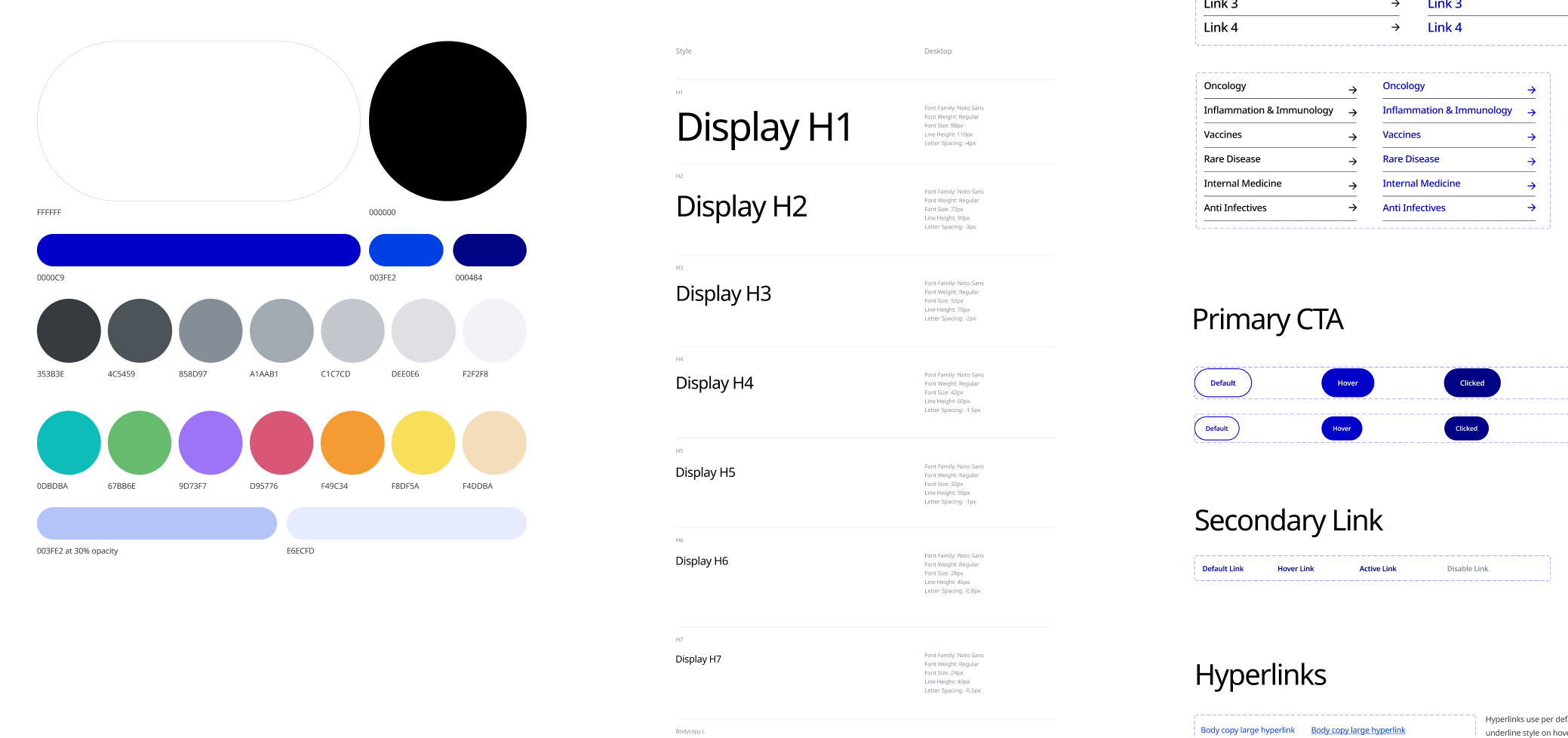
First things first, we had to create the toolkit for design implementation. Using Pfizer's established color palette and fonts from rebranding studio, Team Design, we built a digital design system.
Component Building
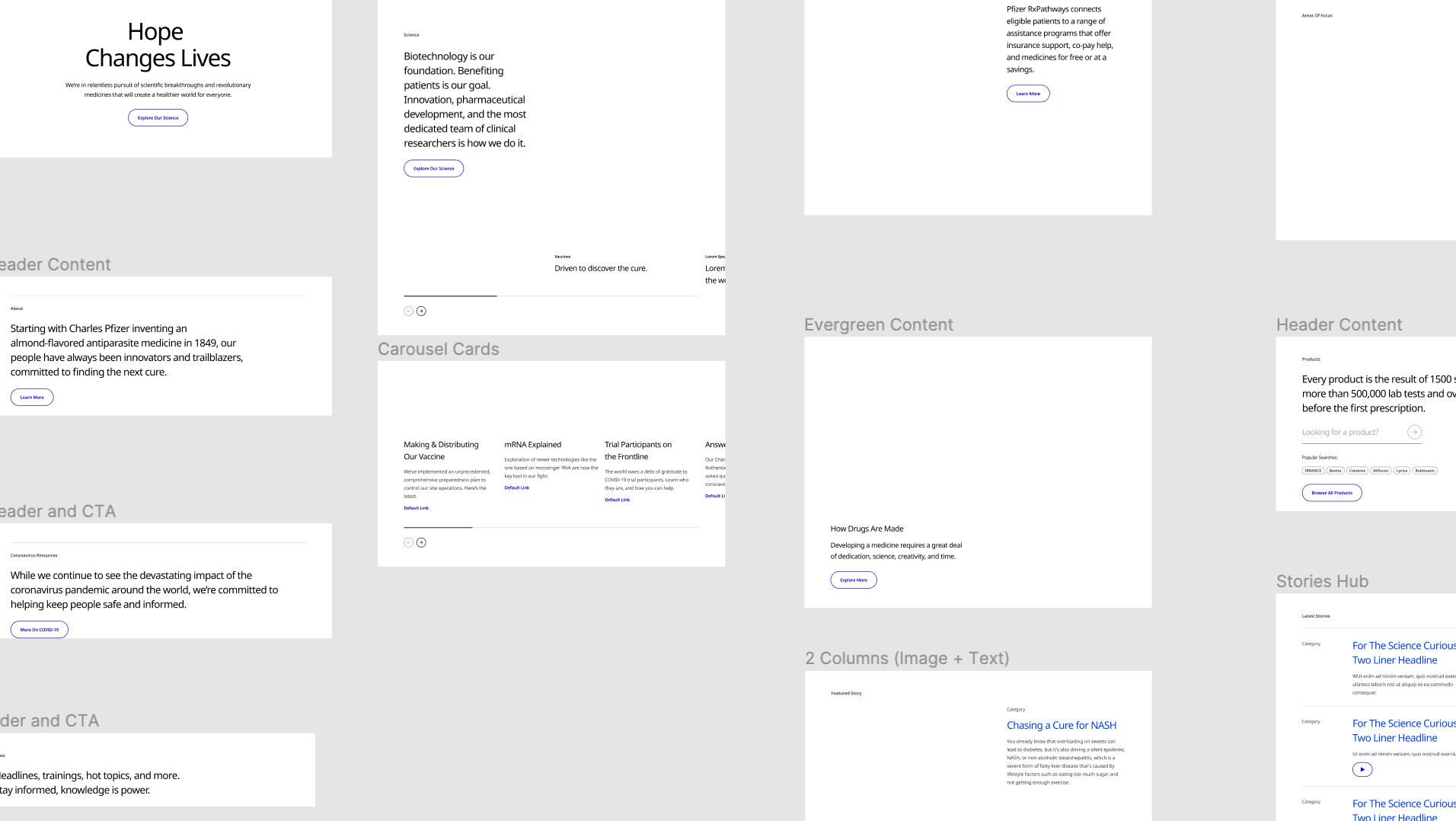
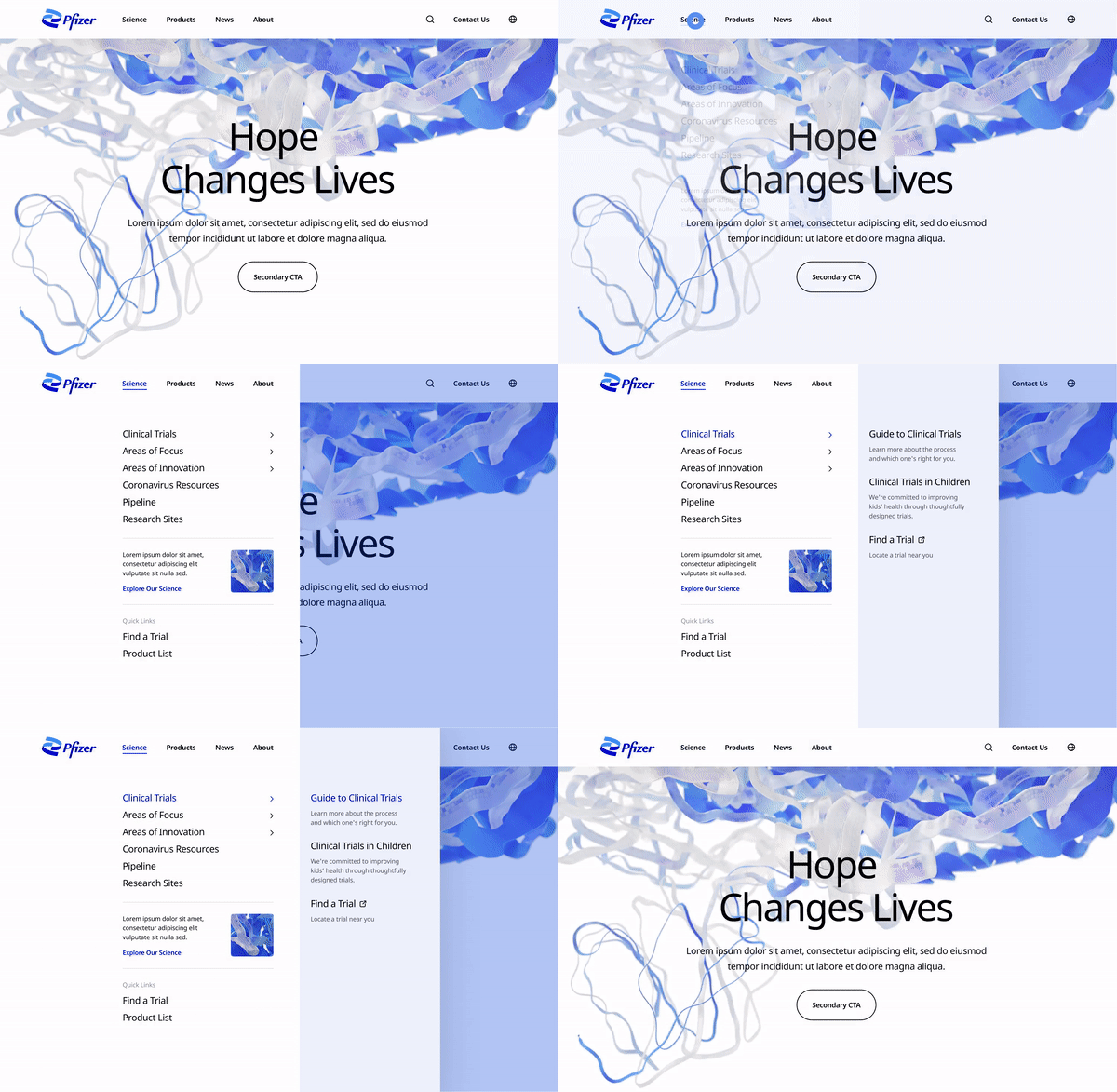
My fellow designers and I were now able to start applying design. By using a modular system with components, Pfizer's team and third-party developers are able to build pages quickly and efficiently.
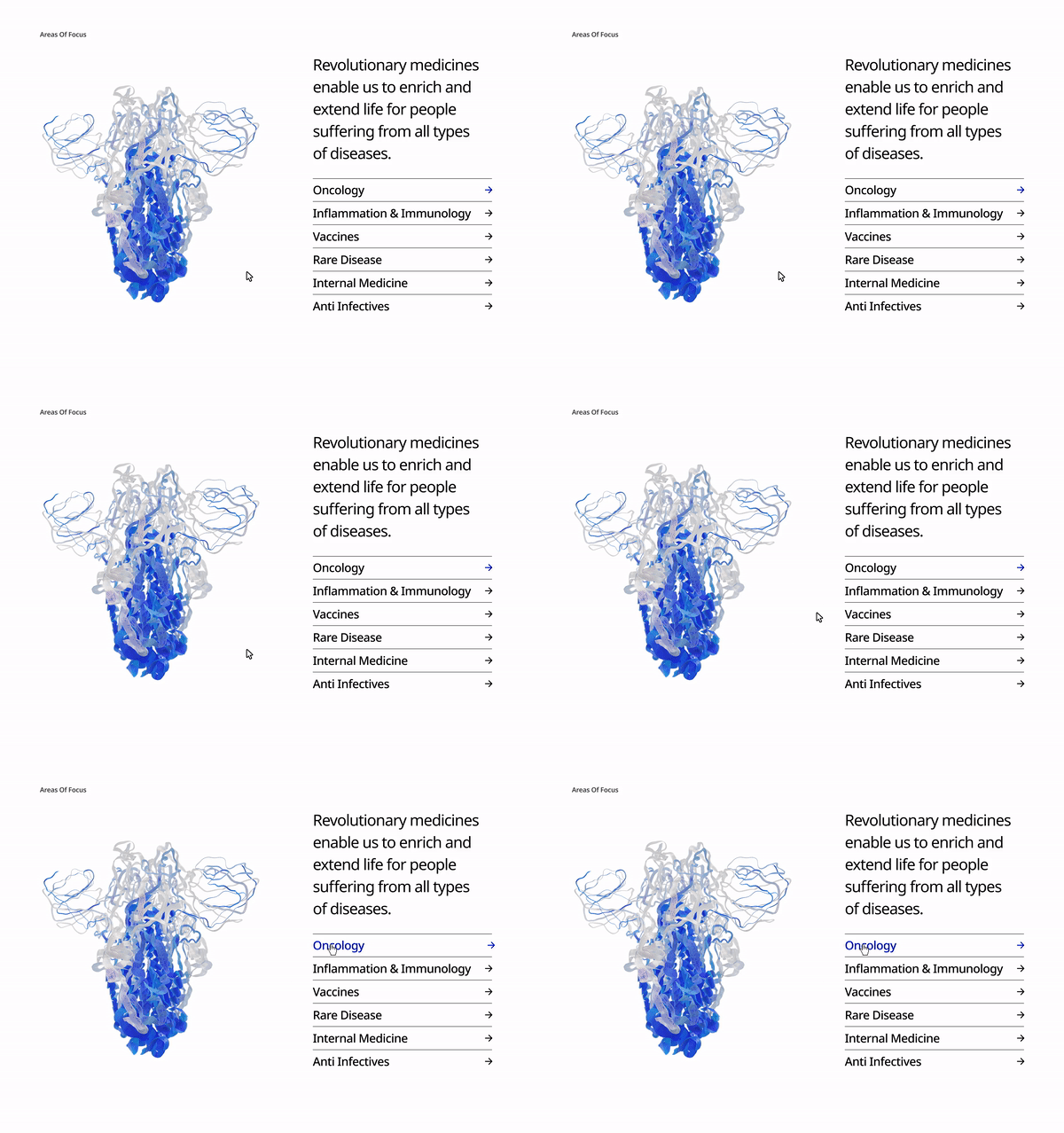
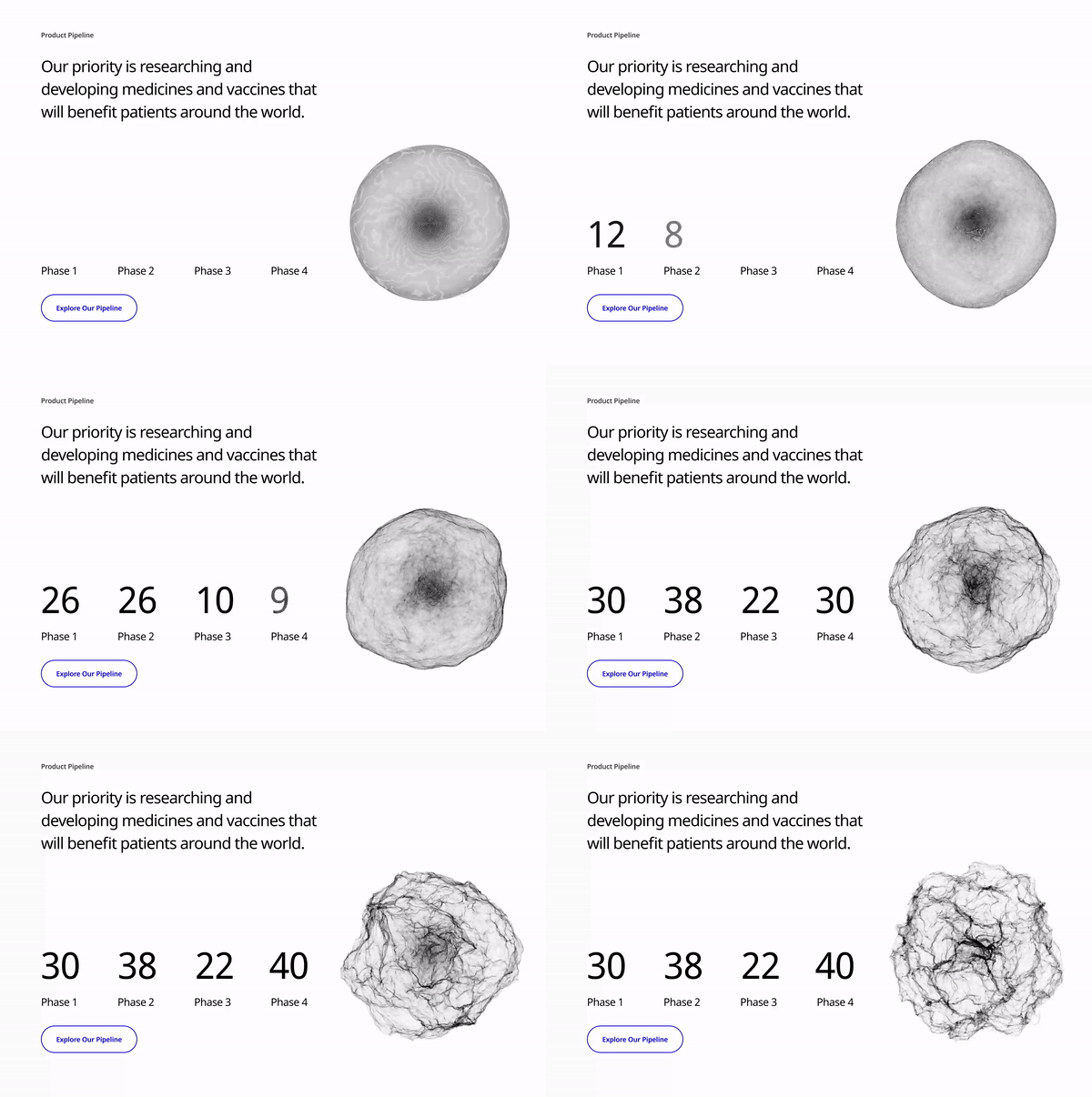
We also provided interaction prototypes to guide Pfizer's developers.
Results
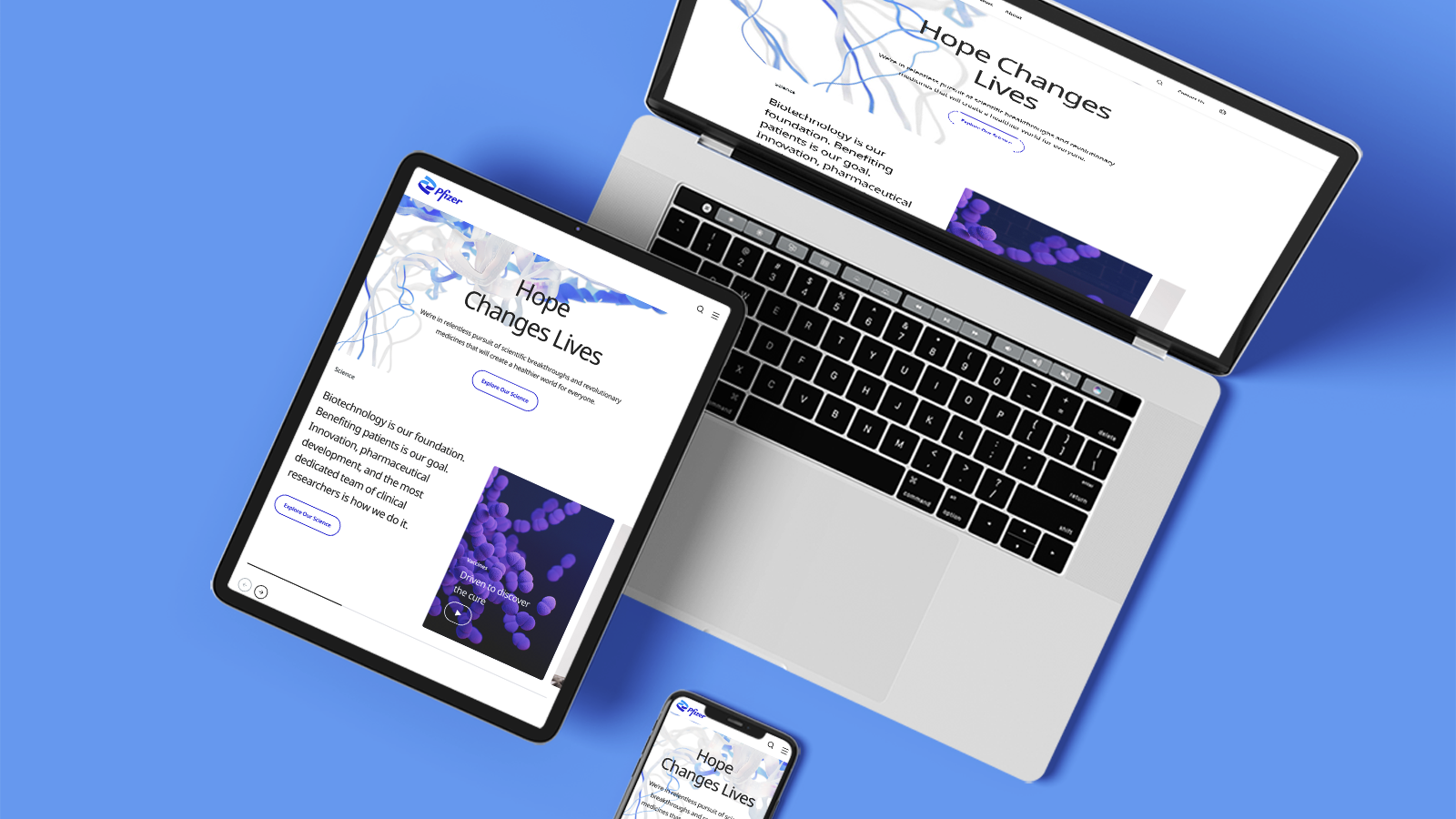
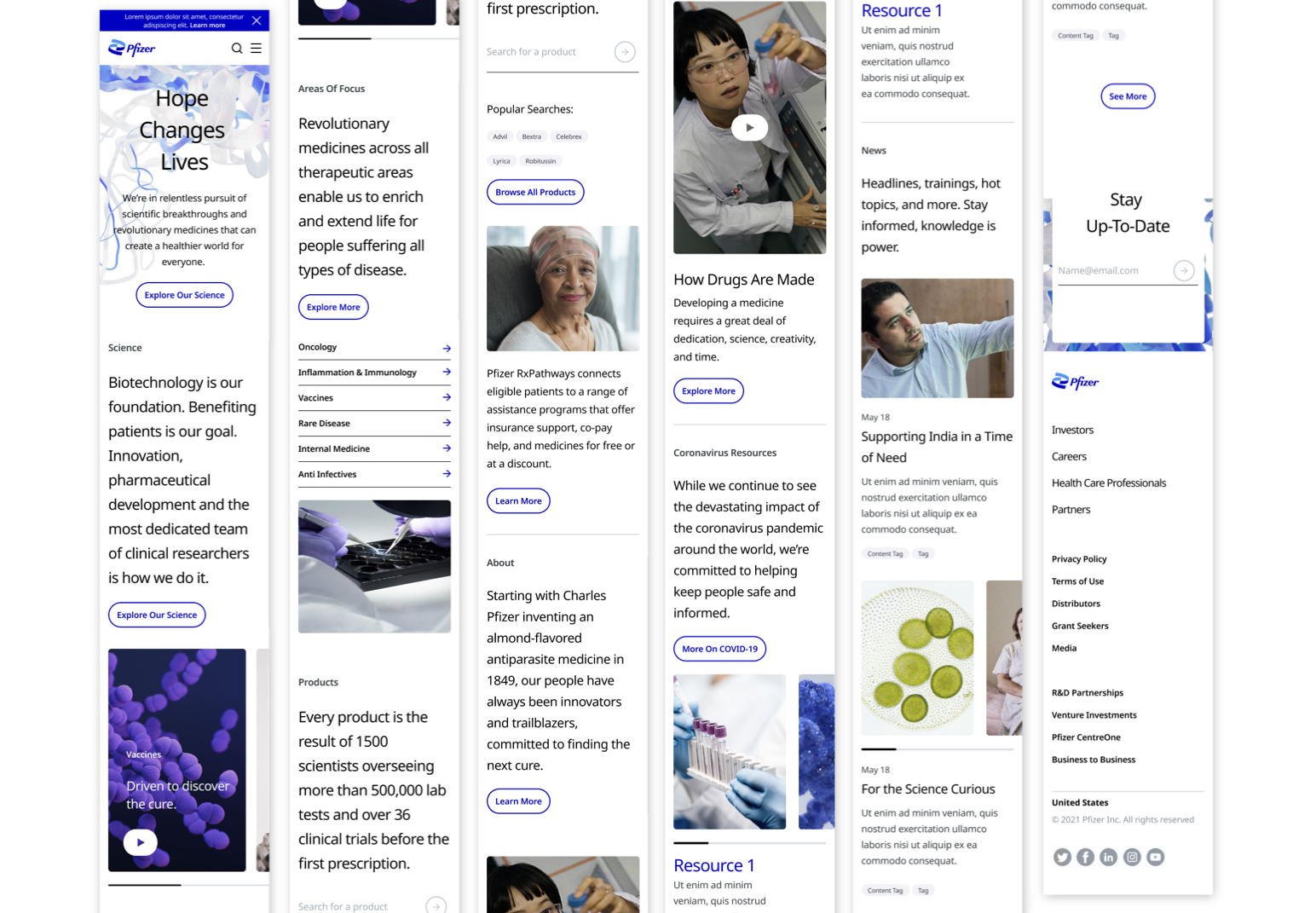
The new Pfizer.com is a testament to the power of transparent and collaborative teams. I worked directly with researchers, clients, stakeholders and developers across the world to bring this site to life on desktop, tablet, and mobile.
Additional Workstreams
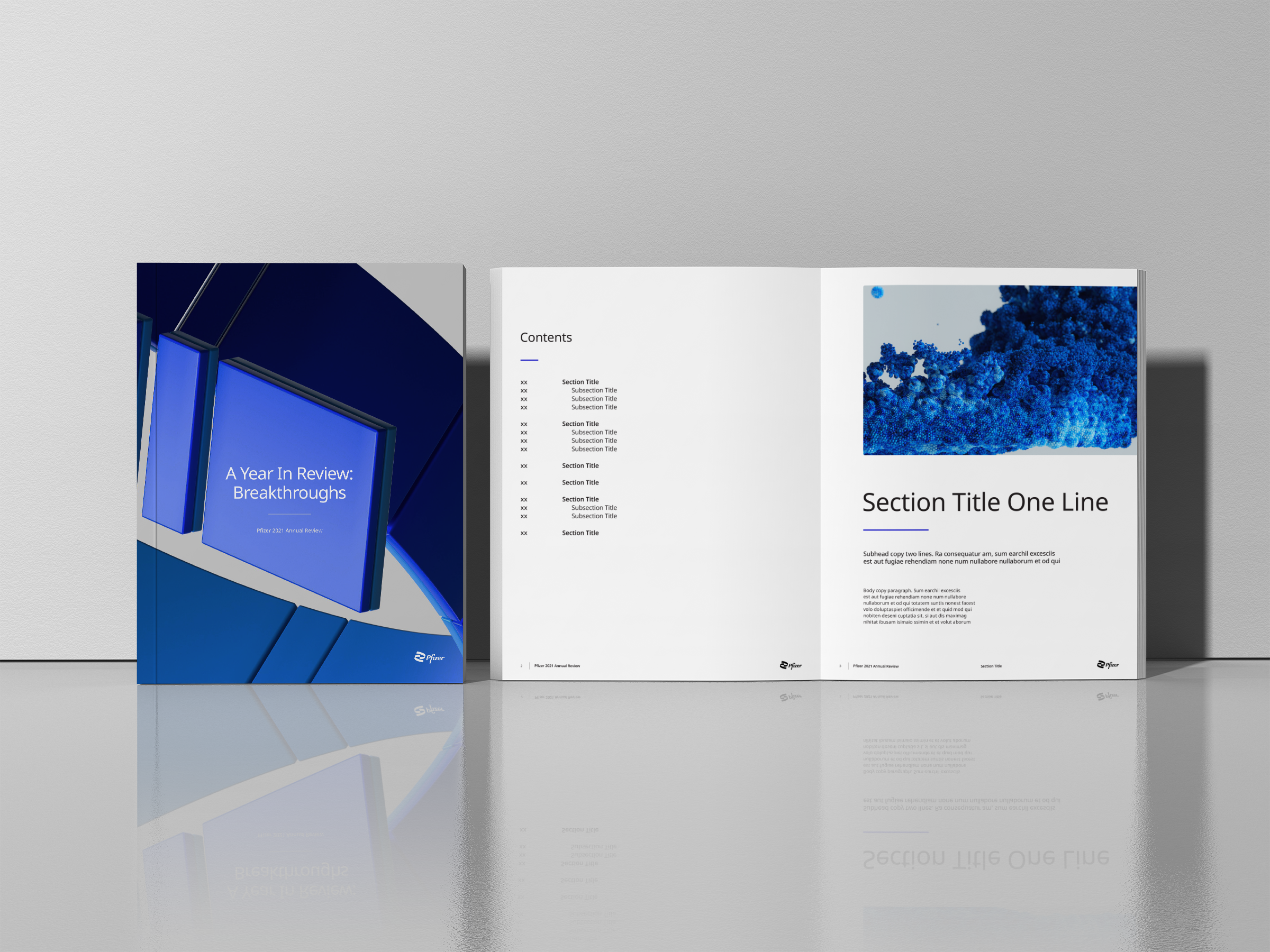
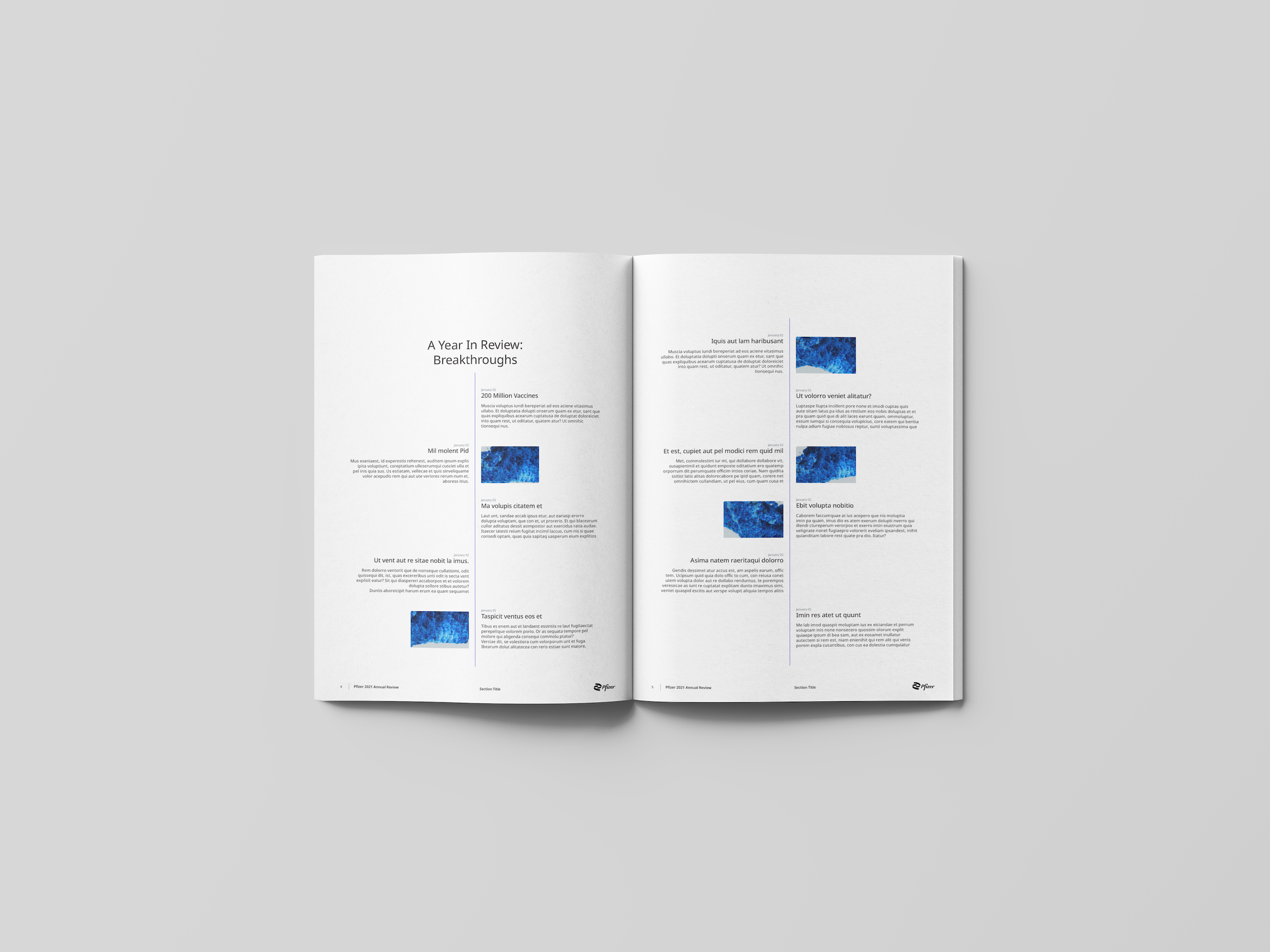
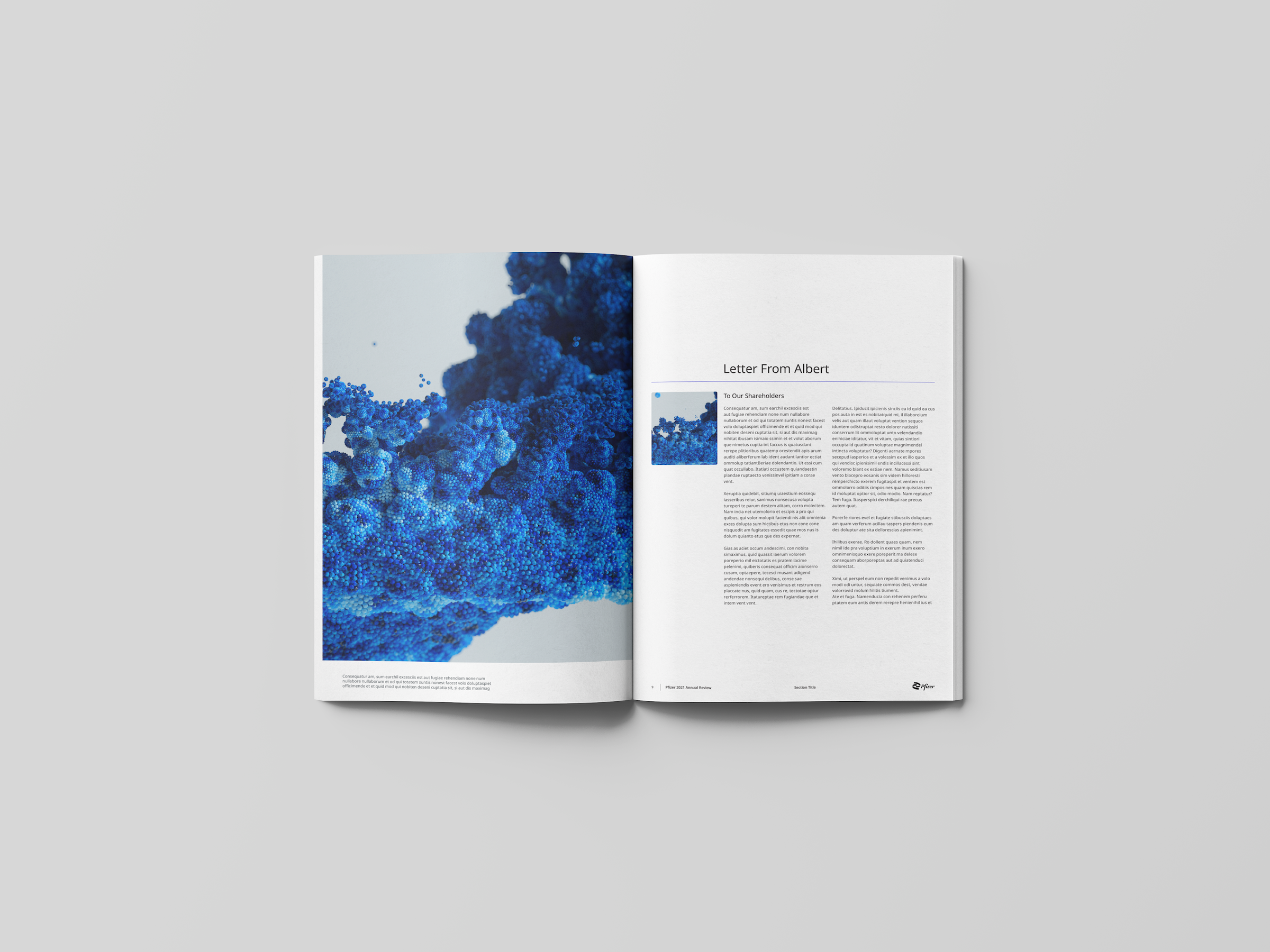
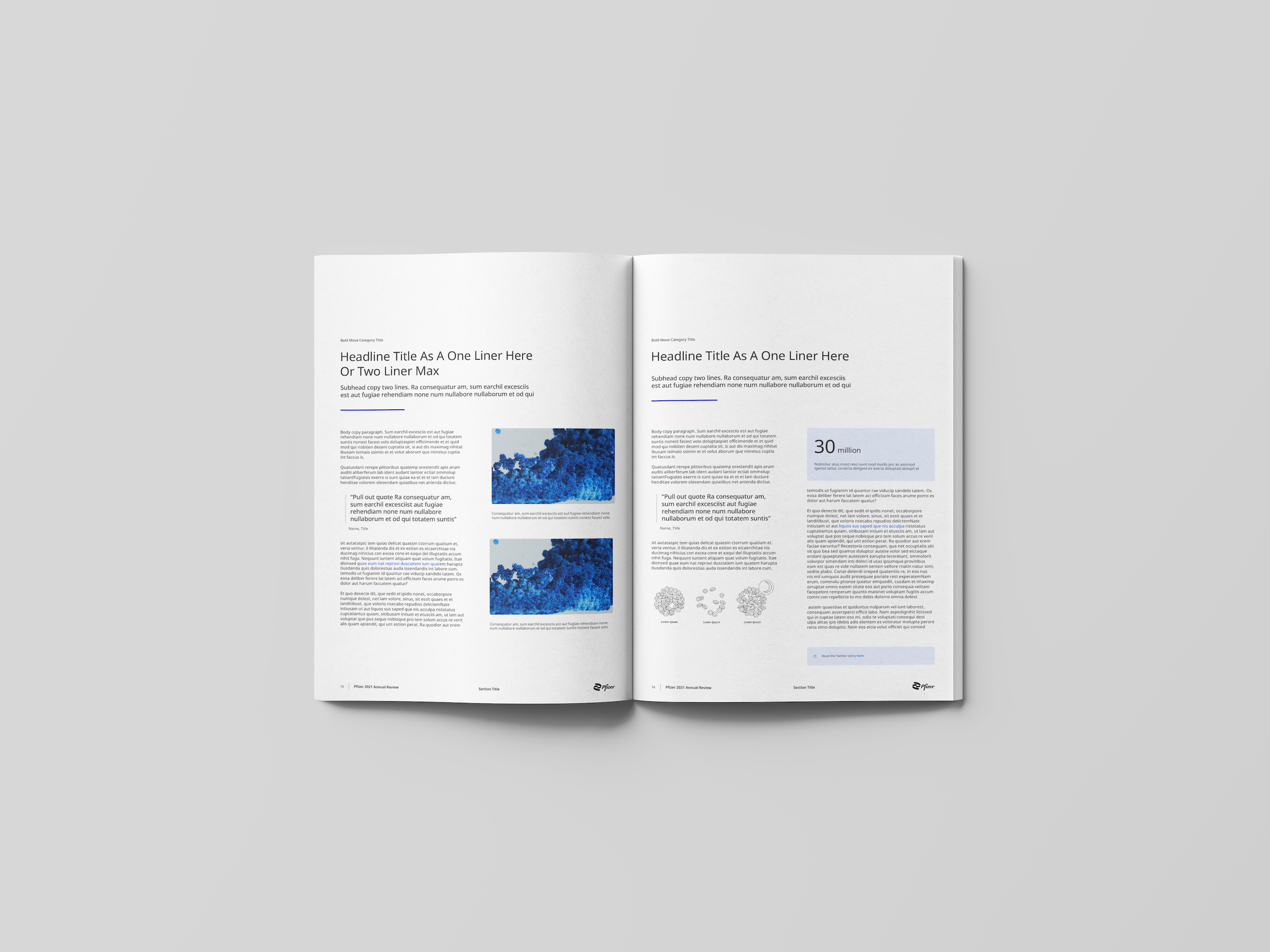
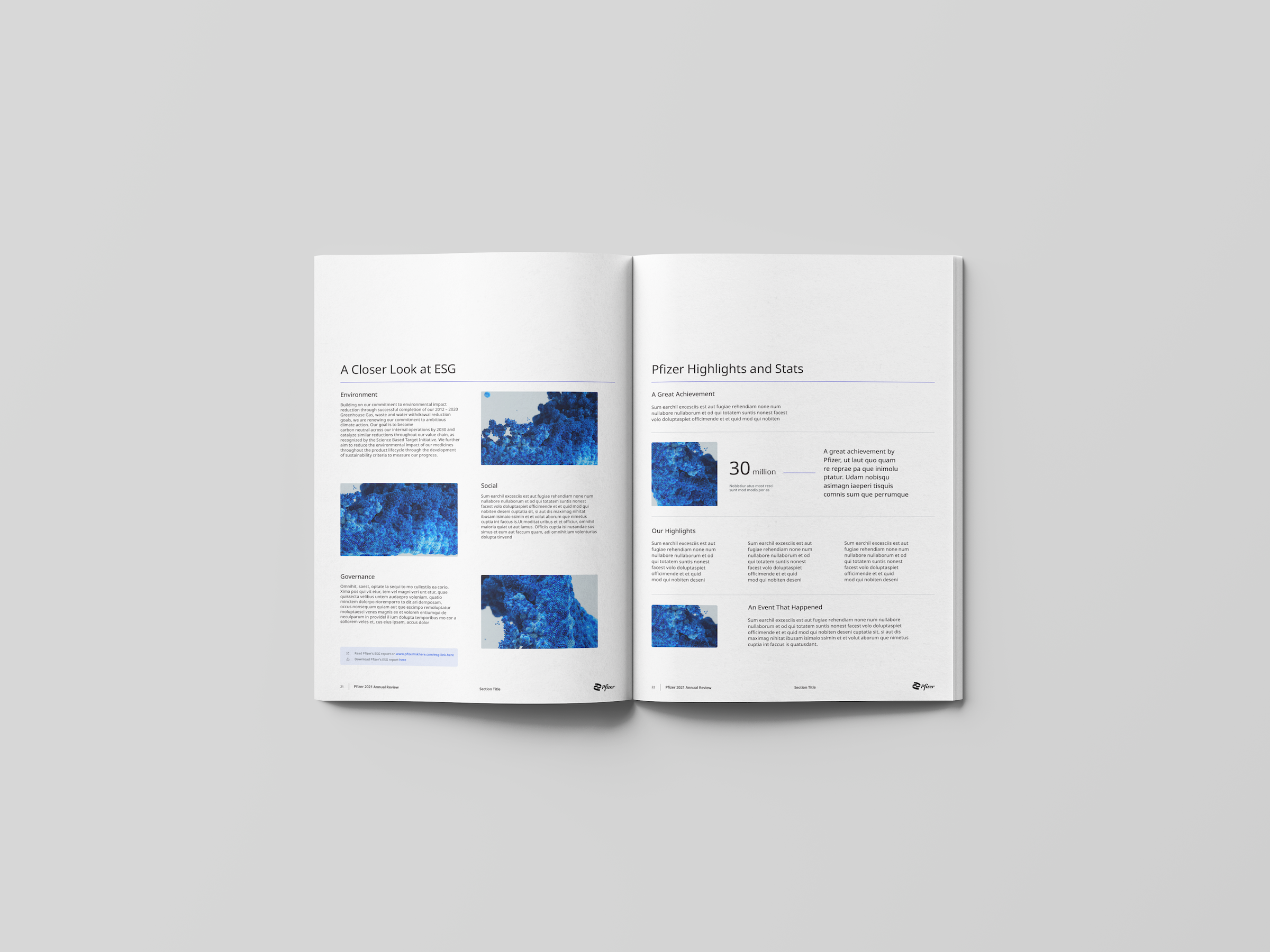
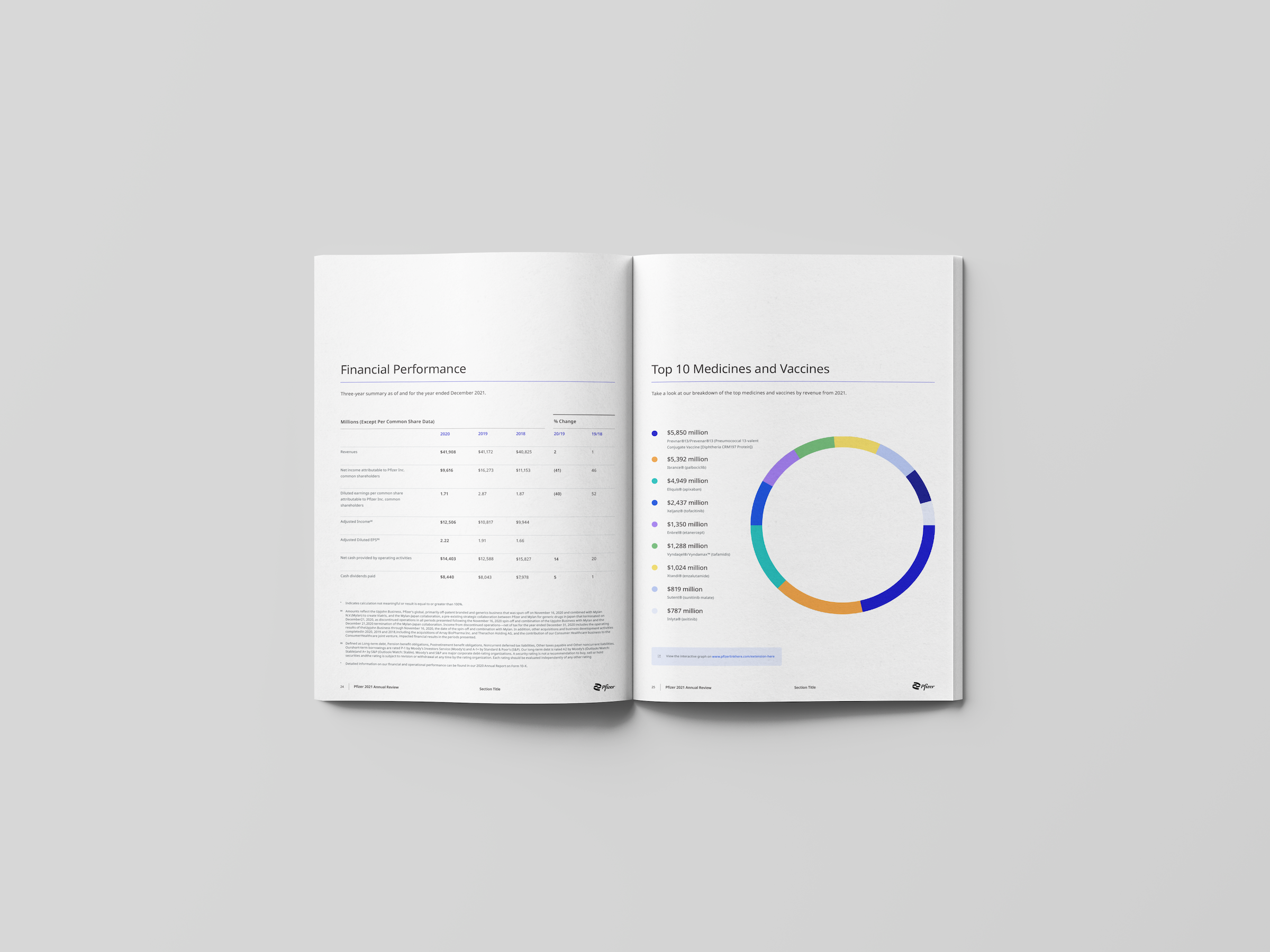
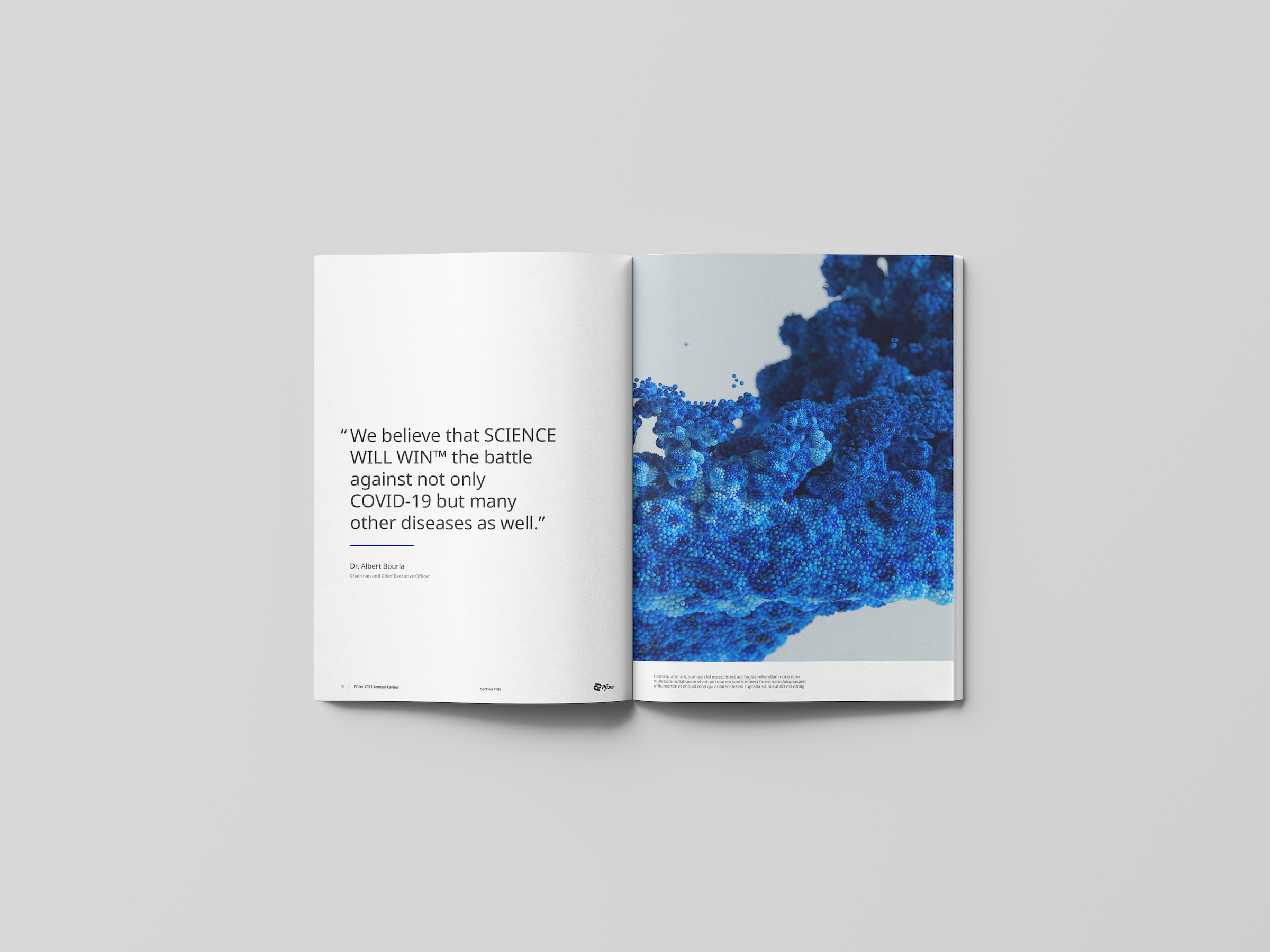
During the revamp of the dot-com, we also obtained two additional workstreams that I directly worked on simultaneously: custom New York Times-esque editorial articles and Pfizer's 2021 annual review (microsite and print). For more information about these projects or this case study, please feel free to reach out. Thanks for reading !